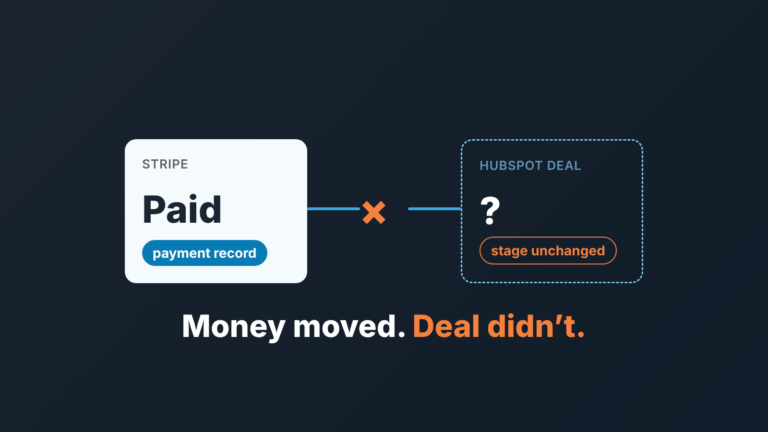

A dirty pipeline doesn’t look dirty. It looks full. Deals sit in “proposal” for two months, forecasts show 4x coverage, and reps burn hours chasing accounts that went cold in week three. Sales pipeline hygiene isn’t a quarterly cleanup project — it’s a set of small, repeatable habits tied to specific triggers. Below are five that hold up after the first month, each with a trigger, an action, and a way to know it worked.
Habit 1: Run a Weekly Stage-Age Check Every Monday Morning
Trigger: the start of the sales week. Action: pull every deal that has sat in its current stage longer than your threshold, then have a same-day 5-minute conversation with the owning rep — call or Slack, not email. Success signal: by Monday evening, every flagged deal has a dated next step, or it’s been demoted or closed-lost. Monday works because reps still have the week to act on what they find.
How to Set Your Stage-Age Thresholds
Skip industry benchmarks. Pull your last 20 closed-won deals and calculate average days spent in each stage — that’s your real threshold. No historical data yet? Start with a flat 14-day rule per stage and adjust after 60 days of tracking.
The 5-Minute Rep Conversation Script
Ask three questions, nothing more: (1) What happened since we last talked about this deal? (2) What’s the specific next step, and when does it happen? (3) Is this still winnable this quarter? If the rep can’t put a date on question 2, move the deal back a stage on the spot.
Habit 2: Enforce a “No Next Step, No Stage” Rule at Every Deal Review
Trigger: any pipeline discussion in a deal review or 1:1. Action: a deal above discovery only holds its stage if it has a logged next step in the CRM — contact name, action, calendar date. Success signal: after 30 days, over 90% of deals carry a logged next step. This breaks the habit of reps advancing deals on optimism instead of buyer action.
Making This Stick Without Micromanaging
Frame it as deal protection, not policing: “I can’t defend this deal in forecast without a next step.” Say it once, apply it consistently, and handle gaps privately — not in front of the team.
Habit 3: Do a Closed-Lost Debrief Within 48 Hours of a Loss
Trigger: a deal is marked closed-lost. Action: within 48 hours, run a 10-minute debrief answering four questions and log the answers in a consistent format. Success signal: after 60 days, patterns surface — a lead source that consistently loses at proposal, for example — and something upstream changes.
The Four Debrief Questions in Practice
1) When did we know this was at risk? (surfaces denial) 2) What did we miss or ignore? (finds skill or process gaps) 3) Did this deal ever match our ICP? (checks for bad-fit intake) 4) What’s one thing we’d do differently? (produces an actual takeaway). Keep it to 10 minutes — see our closed-lost analysis guide for the full template.
Habit 4: Trim the Bottom 20% of Your Pipeline Every Month
Trigger: last business day of the month. Action: sort by lowest probability or longest time in stage, take the bottom 20% by count, and make a binary call on each — a specific revival action with a deadline, or closed-lost. Success signal: pipeline count stays manageable, average deal age drops over three months, and forecast accuracy improves. Reps resist this because volume feels like safety — a smaller, clean pipeline forecasts and closes better than a bloated one. The record side of hygiene has its own routine: a 60-minute CRM data cleansing pass once a month.
Revival Action vs. Immediate Close-Lost: How to Decide
If the rep can name a specific person who will respond to outreach this week, with a reason to respond, it’s a revival candidate. “I’ll try emailing again” is not a plan — that’s closed-lost.
Habit 5: Audit New Deals Against Your ICP Within 72 Hours of Creation
Trigger: a new deal is created. Action: within 72 hours, check it against a 3–5 point ICP checklist. Two or more misses trigger a qualification call before proposal resources are spent. Success signal: after 90 days, fewer proposal-stage losses tagged “not a fit.” Fixing hygiene at intake is cheaper than cleanup at close.
Building a 5-Point ICP Checklist Your Team Will Actually Use
Pull your last 15 closed-won deals, list what they had in common across company size, industry, budget signal, decision-maker access, and use case, then turn each into a yes/no question. If reps can’t answer one from a single discovery call, it’s too complex — simplify it.
FAQ
What is pipeline hygiene in sales?
Pipeline hygiene is the ongoing practice of keeping only qualified, active deals in your pipeline so forecasts stay accurate and reps focus on winnable opportunities. It’s a habit system, not a one-time audit.
How often should you clean your sales pipeline?
Some habits run weekly (stage-age check), some are event-triggered (closed-lost debrief, new-deal ICP audit), and a full bottom-of-pipeline trim happens monthly. Together, the pipeline is never more than a week from a hygiene touch.
How do you get sales reps to keep the CRM updated?
Tie updates to deal protection, not data collection — a deal without a logged next step doesn’t survive forecast review. Cut unused CRM fields; fewer fields, better compliance.
What is a good pipeline coverage ratio?
There’s no universal number. Divide total pipeline value by quota, then benchmark against your actual win rate from the last two quarters — see our guide on calculating pipeline coverage ratio for the formula.
How do you identify zombie deals in your pipeline?
Three signs: no buyer contact in more than two stage-durations, no logged next step with a date, and the last activity was rep-initiated with no response. If all three are true, close it and log the reason.
What’s the difference between pipeline hygiene and pipeline management?
Pipeline management is moving deals through stages toward close. Pipeline hygiene is the subset of habits that keep the pipeline accurate and free of dead weight — without it, forecasts mislead and reps waste time.
Conclusion
Five habits: Monday stage-age check, no-next-step-no-stage rule, 48-hour closed-lost debrief, monthly bottom-20% trim, and 72-hour ICP audit on new deals. None require new software — just consistency and a manager willing to hold the line. Pick one, run it starting this Monday, and track its success signal for 30 days before adding the next.