
The first slide brings good news: the open pipeline has grown by 20%.
In this hypothetical Monday review, six new opportunities have arrived. The owner starts discussing an additional hire to handle the expected work. Then someone opens the deals that were supposed to close this quarter.
One buyer has postponed its budget meeting. Another has stopped responding since the proposal. A third still appears under “Negotiation”, although the person who supported the purchase has left the company. Four weeks remain in the quarter. The new opportunities are only beginning their evaluation.
The pipeline has grown. The evidence supporting the near-term sales forecast has weakened.
That gap is what a useful revenue-at-risk assessment should help a leader investigate.
Used well, the measure helps answer two questions: how much potential business needs attention, and what can the team still influence?
How a growing pipeline can conceal a weaker forecast
Total pipeline value combines opportunities at different stages, with different timelines and different levels of buyer commitment. Adding them produces a useful inventory of potential business. It also removes much of the information needed to judge when that business might materialise.
In the opening example, the six new opportunities may be excellent prospects. They still cannot be assumed to replace purchases that were expected within four weeks.
The mistake happens when growth in one population—all open opportunities—is used to justify confidence in another: the deals expected to close this quarter. The owner could commit to additional delivery capacity before checking whether the timing of demand supports that decision.
New opportunities can also conceal deterioration within the existing pipeline. A proposal stays open, its value remains unchanged, and its close date moves forward. The total preserves the opportunity while losing the history of why it was once considered promising.
A buyer-confirmed decision date, access to the budget holder, or an agreed evaluation plan can justify confidence. If those conditions change, the assessment needs to change—even when the CRM label does not.
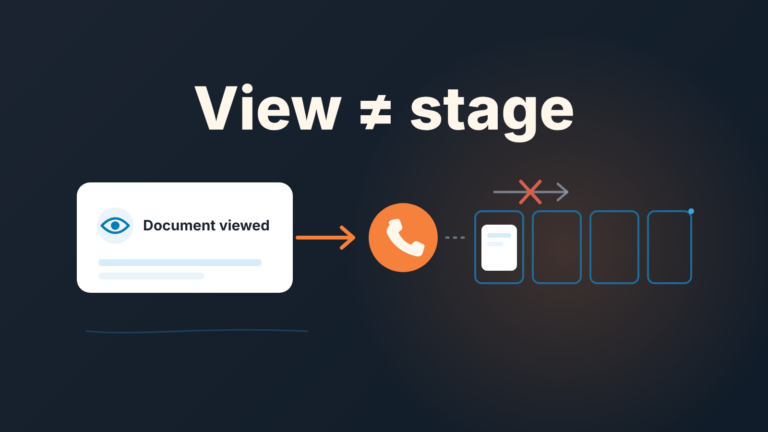
The same applies to activity. A representative may send more messages because a buyer has become less responsive. The activity count rises precisely because engagement has weakened. Reviewing only the seller’s effort can make the situation look healthier than it is.
This is why a useful pipeline review follows commitments: what the buyer agreed to do, whether it happened, and what the result means for the next step.
Genuine need alone does not settle the question. A prospect can need a solution and still postpone, reduce the scope, build internally, or abandon the purchase. Matthew Dixon and Ted McKenna’s work on customer indecision examines how purchases can stall because buyers fear making the wrong decision. The management implication is straightforward: evidence of a problem and evidence of an active buying decision deserve separate attention.
Why an amount N at risk does not mean losing N
Let N represent an unspecified monetary amount, applicable in any market. Suppose the dashboard flags opportunities with a combined value of N.
That tells you how much potential business meets the selected risk criteria. It does not establish the eventual outcome of those opportunities.
Some might be lost. Others might close later, close at a lower value, or recover after a timely intervention. Some warnings may turn out to reflect missing information rather than a commercial problem.
Four measures need to remain distinct:
| Measure | What it tells a leader | What it does not establish |
|---|---|---|
| Total pipeline value | Recorded value of open opportunities in scope | How much will close, or when |
| At-risk pipeline value | Value attached to opportunities meeting defined risk criteria | The amount that will ultimately be lost |
| Sales forecast | An estimate of sales likely to close within a defined period | A guaranteed result |
| Expected loss | An estimate based on specified adverse outcomes, probabilities, and amounts | Something a warning flag alone can calculate |
These comparisons require consistent valuation. Mixing annual contract values with full multi-year contract values makes the total difficult to interpret. Open pipeline also does not, by itself, represent recognised revenue or cash owed by customers.
The type of risk matters. A purchase moving into the next quarter changes timing. A reduced order changes value. A competitor winning the contract changes the outcome entirely. Treating all three as the same loss can lead to inappropriate responses, such as offering a discount to solve a scheduling problem.
There are two further traps. First, three warnings on one deal should not count that deal’s value three times. The warnings can strengthen the case for intervention without multiplying the exposure.
Second, removing every flagged opportunity from total pipeline value does not produce a reliable forecast. Flagged deals can still close; unflagged deals can still fail. A health score of 70/100 likewise does not automatically imply a 70% win probability. That interpretation would require a model designed and validated to estimate that probability.
The distinction matters because an owner who reads N as an inevitable loss may abandon recoverable opportunities. An owner who dismisses it as “only a warning” may miss the chance to influence them.
What deserves attention first?
A monetary total establishes scale. Deciding what to do requires context.
Severity describes how seriously the issue threatens the purchase. A missing internal note and a cancelled budget should carry different weight.
Deal value describes the potential business exposed. It helps distinguish a widespread process issue from a concentrated commercial exposure.
Urgency describes the time available to act. The meaningful deadline may be the buyer’s committee meeting or procurement cut-off, rather than the seller’s preferred close date.
Confidence describes the strength and freshness of the evidence behind the assessment. A direct message cancelling a project supports a different conclusion from an empty budget field.
These dimensions inform judgement; mechanically multiplying them together can create an impressive-looking number without a defensible interpretation. Low confidence may call for a prompt fact-finding conversation. It should not make an uncertain opportunity appear safe.
Consider a second hypothetical situation. The largest troubled deal has a confirmed budget freeze with no reopening date. A smaller deal can still reach the buyer’s approval meeting, provided a technical question is answered by Friday.
The smaller deal may deserve the team’s next hour. Its combination of urgency and a tractable obstacle gives that hour a clearer purpose. The larger opportunity still needs an honest forecast treatment and a suitable follow-up plan.
Sales prioritisation becomes more useful when it asks where an available action can plausibly change the outcome. Sorting solely by deal size or warning count misses that question.
Check why the risk number changed
Revenue at risk can fall for several reasons: an obstacle was resolved, a deal was won, a deal was lost, or its expected close date moved outside the reporting period.
Only the underlying explanation tells the owner whether the business improved.
For example, moving a troubled opportunity into next quarter may correct this quarter’s forecast. That is a worthwhile reporting improvement. It provides no evidence that the buyer is any closer to purchasing.
Conversely, introducing better monitoring may increase the reported risk simply because more existing problems become visible. A rising number can reflect improved detection, deteriorating deals, or both. Comparing periods requires reasonably consistent criteria and coverage.
This creates an important management discipline: distinguish a change in the commercial situation from a change in what the company knows about it. Both matter, but they call for different conversations.
Connecting deal signals with daily action
Maintaining that distinction manually becomes harder as opportunities multiply. A manager can examine a handful of important deals in depth. Repeating the exercise across the pipeline, often enough to catch meaningful changes, creates a substantial workload.
SalesBond’s Deal Health continuously monitors active opportunities and surfaces signals such as stalled deals, missing next steps, overdue activities, and excessive time in a stage. Its deal health scores help identify opportunities requiring attention.
Sales GPS uses CRM signals, deal health, deadlines, and sales targets to build a prioritised daily action plan. It helps representatives choose relevant next actions and gives managers visibility into priorities.
Applied to a hypothetical opportunity, that workflow could begin with an overdue follow-up and a long stay in negotiation. Deal Health surfaces the issue. Sales GPS helps prioritise a response alongside the representative’s other work. The representative then investigates whether the buyer’s decision process is still active.
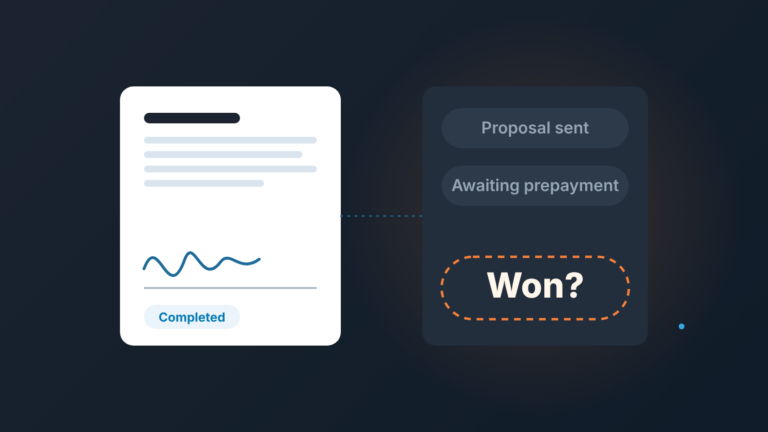
The evidence after that conversation determines the next assessment. A newly created task records an intention. A buyer-confirmed meeting with the budget holder provides evidence of renewed engagement. Confirmation that the project is frozen supports a different decision.
The team still needs to act and interpret what happens. Missing CRM information can obscure a healthy deal; a complete record can describe a weak one. Continuous monitoring and AI-assisted guidance are useful when they help people identify the right questions and follow through.
Make the next pipeline review more specific
Return to the Monday meeting. Before approving extra capacity because the pipeline is up 20%, the owner needs to understand what the increase contains and what has happened to the business expected this quarter.
Five questions can sharpen that discussion:
-
Which buyer commitments have changed since our last review?
Identify the evidence that strengthened or weakened each material opportunity.
-
Which current-period close dates still have a credible path behind them?
Check the remaining buyer decisions and approvals.
-
For each material risk, are we concerned about losing the deal, delaying it, or reducing its value?
Match the response to the problem.
-
Where can a specific action still influence the outcome—and by when?
Give that action an owner and a clear purpose.
-
What observable evidence would show that the risk has decreased?
Agree how progress will be recognised before declaring the issue resolved.
A fuller pipeline offers more possibilities. The quality of the decisions made around it depends on understanding which possibilities remain credible, which need investigation, and which the team can help advance.